 Search
  1-844-PUSHPAY
 5 things Catholic parish leaders can’t miss in the Pope’s new encyclical
Is your church software at odds with the Pope's new AI encyclical? Here are 5 ways parish leaders can use AI tools while keeping human judgment in the loop.
Your new encyclical and your church software are about to have an argument on Monday morning. Many parish staff members will be tempted to interpret it wrong.
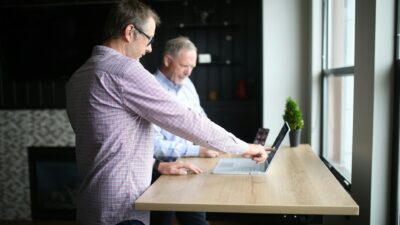
Picture your next staff meeting. The pastor sets a document on the table and asks the room, “So what are we supposed to do about this?” It’s Pope Leo’s new encyclical, Magnifica humanitas, or “Magnificent Humanity: On Safeguarding The Human Person in the Time of Artificial Intelligence.”
Then he looks at the one person who actually runs the church management system. That person is already behind. Duplicate profiles in the database. Year-end giving statements due. A rapidly expanding new-visitor list nobody has called.
One reading says put the tools and software down and do it by hand. You’re a person, not a machine, after all. The other reading says the Pope is asking something harder than “use it” or “don’t.”
Magnifica humanitas is not a software ban, and it isn’t a buyer’s guide. Pope Leo XIV writes that “in the era of artificial intelligence, when human dignity is threatened by new forms of dehumanization, ours is the pressing duty to remain profoundly human” (#15).
That’s not a rule about which app you are allowed to install.
It’s a duty about who stays in charge while you use it.
Nine Catholic AI experts spent three long conversations on The Faith & AI Project Podcast, working out what that means on the ground. Five insights kept surfacing.
Every one comes down to the same muscle: judgment.
Knowing when to accept what the software hands you, and when to overrule it is the key to applying what the Pope is calling us to.
1. You can’t automate a conscience
Your software can sort your parishioners. It cannot be responsible for them.
The encyclical names the danger exactly: handing a system “the power to select who is worthy or not, without anyone bearing responsibility” (#103). Your church giving dashboard can flag a lapsed donor. Your engagement tracker can rank who’s drifting. Both are useful. But the software never decided that a family wasn’t worth a call. You did, or you didn’t. The recommendation is the machine’s. The answer for that family is yours.
Fr. Philip Larrey, Professor of Philosophy at Boston College, formerly Dean of Philosophy at the Pontifical Lateran University in Rome, put it as plainly as anyone has:
“In order to make a moral decision, you need a conscience. You need responsibility, you need a life, and you need accountability. AIs don’t have that.”
2. The tool already has a point of view
There is no neutral church software. Every tool ships with somebody’s priorities baked in.
“Technology is never neutral,” the Pope writes, “because it takes on the characteristics of those who devise, finance, regulate and use it” (#9). You see it in the small defaults. The auto-suggested “we missed you!” tone that reads as glib to a family that just buried someone. The visitor-note summary that keeps the email address and drops the fact that she asked about the annulment process. The question isn’t “when do I put the tool down?” It’s whose choices and priorities are inside this thing, and do they line up with mine?
Override the defaults that don’t. Make the templates sound like your parish, not a generic SaaS welcome flow.
Taylor Black, Director of AI and Venture Ecosystems at Microsoft and Founding Executive Director of the Leonine Institute for AI and Emerging Technologies at the Catholic University of America, says it from inside the industry:
“Every time we ship a generative AI product, we’re implicitly shipping a certain understanding of human anthropology, and tech is not the authority on human anthropology.”
3. Data on your parishioners is the start of a conversation, not a verdict
An engagement number tells you where to look. It does not tell you what’s true.
“The quality of a civilization,” #114 says, is measured by “its ability to recognize the other as a face not merely as a function.” For instance, the system marks a parishioner as “low engagement, low priority.” But a staff note from three weeks ago says his wife just died. The data is right and useless at the same time. You call him anyway, and you call him first. The score points; the person decides; the person wins the tie.
4. Name what you’re handing off
Intentionally decide what should be automated and what should remain personal.
The encyclical says “every technology shapes those who use it,” and that real formation means learning “when and for what purpose it ought not to be used” (#140). Run your office responsibilities through that test. Start with the standing tasks like scheduling, reminders, receipts, duplicate cleanup. Hand them over without guilt. Then address the other column. The first call after a death, sacramental prep, walking a returning Catholic back through the door. That’s the relationship wearing a task’s clothing, and it stays yours. Sort the two now, on a calm afternoon, before a busy Tuesday sorts them for you.
Fr. Jean Gové, Diocesan Coordinator for AI for the Archdiocese of Malta, author of Malta’s 2026 position paper on the ethical adoption of AI, and Holy See representative at the Council of Europe on AI, gave two questions that work as a field test:
“What am I offloading onto the machine that I should be doing? What am I getting from a tool that I should be getting from a relationship?” —Fr. Jean Gové
5. Slow is a feature
Just because technology can do a myriad of things more efficiently than a human can doesn’t mean it should.
“Let us cultivate relationships!” Leo writes. “In an era that favors speed and fragmentation, the human person still yearns to receive care and recognition from attentive minds, kind words and hands capable of tenderness” (#239). Automation sells speed, and most days that’s a gift. But a grief follow-up that auto-fires the same afternoon as the funeral is the wrong kind of fast. It might be personalized, instant, and efficient—but it’sunfortunately wrong. Some sequences should carry a human pause on purpose. Knowing which ones is the whole discipline.
Julianne Stanz, Director of Outreach for Evangelization and Discipleship at Loyola Press, consultant to the U.S. Bishops on Catechesis, and the person who coined “tabernacle with feet” at the 2024 National Eucharistic Congress, named the discipline:
“This document is calling us to a particular kind of pace, a slower pace, a discerning pace, a pace that listens to the Holy Spirit.” —Julianne Stanz
So which is it?
Notice what the five insights have in common. None of them is a case for ripping the data out or doing away with technology. Read together, they’re a single test: Are your tools keeping a human in charge of the judgment, or doing the judgment for you?
That test cuts both ways. If a human stays on the judgment, the software stops being a threat and starts being a help. The dashboard that flags a drifting family isn’t replacing your pastoral care. It’s handing you a fact you didn’t have, so your care lands where it’s needed. The danger was never the data. It was letting the data decide.
So, back to that staff meeting. The Holy Father isn’t asking you to do your data entry by hand to prove your devotion. He isn’t blessing whatever the software defaults to, either.
Keep the tools. Stay the shepherd-in-the-loop. Or the shepherd-in-the-office.
And that is where the hard question gets answered. Treat the “who to follow up with” list as a draft, and never a verdict. Read it, add what the software can’t see, then decide for yourself who gets the call.
The software clears the fog. You still have to look.
Want to dive deeper into Pope Leo XIV’s Magnifica humanitas? Check out our resource hub, created in partnership with The Faith & AI Project, today to learn what Catholic AI experts are saying about the document and what it means for parish leaders.