 Search
  1-844-PUSHPAY
 Why your parish’s text messages are getting ignored
You sent a parish announcement to four thousand people and no one opened it. Pope Leo XIV's new encyclical explains the problem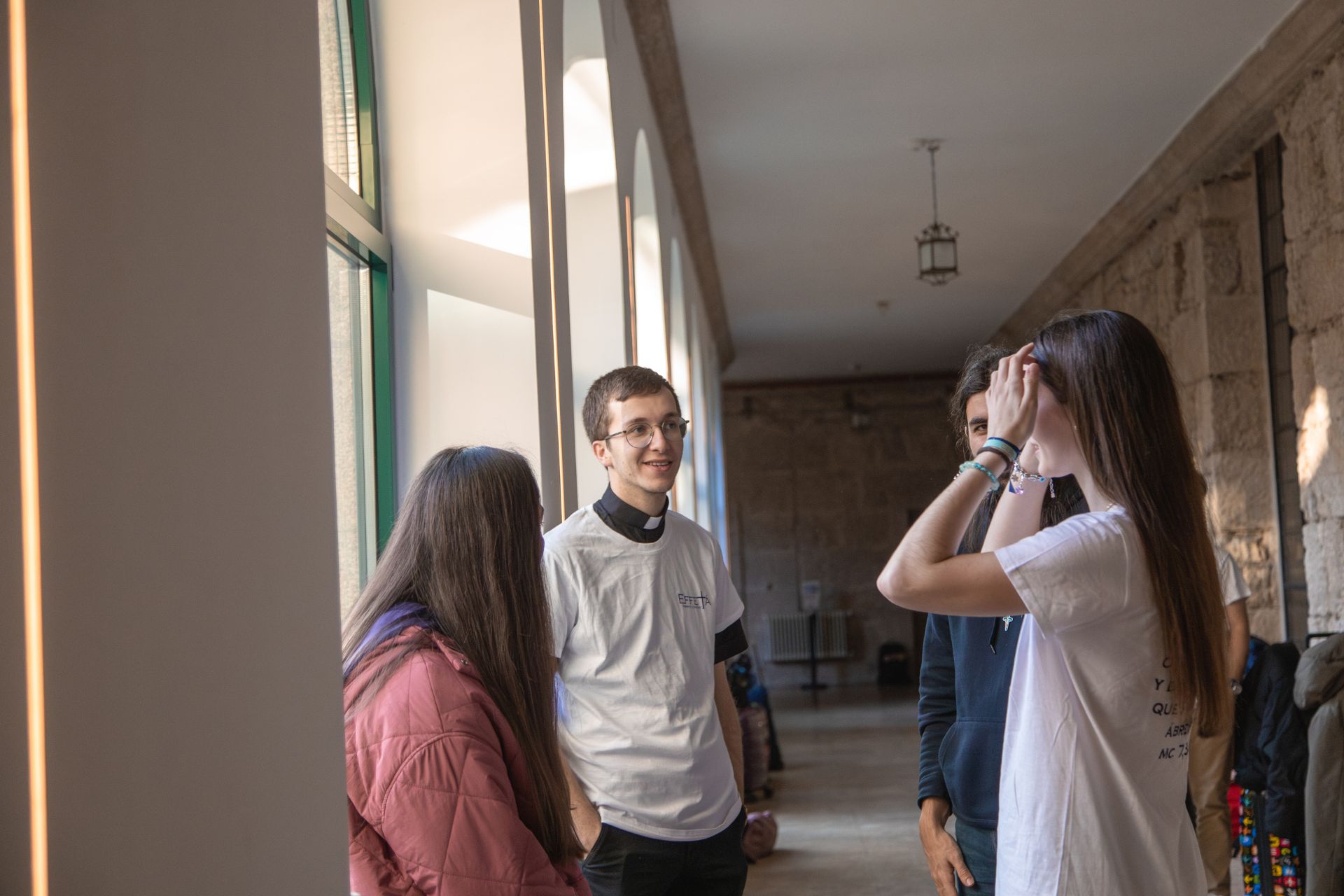
Your parish doesn’t have a tech or marketing problem. It has a voice problem.
Your communications coordinator finishes a message that matters: This weekend’s second collection is for the family two parishes over who lost their house in a fire. She loads the full list and sends it to four thousand phones. Then the report comes back. Two percent opened it. A few people replied “STOP.” Three more unsubscribed.
The cause mattered. The message still read like spam. The parish’s own people scrolled past it the way they scroll past everything.
That gap between a message that matters and a message that gets read is not a technology problem. Pope Leo XIV put a word on it in his new encyclical, and it is not the word you would expect from a document about artificial intelligence.
The word is “disarm.” “Let us disarm words and we will help to disarm the world,” he writes (#214). He is asking us to protect what he calls an “ecology of communication” (#137): a shared space where words still carry truth instead of only competing for attention. Our words, he says, have been armed. Armed for reach. Armed for engagement. Armed for volume. A parish that sends everyone the same thing all the time is firing into that ecology along with everyone else.
If you have ever felt the low-grade exhaustion of writing one more all-parish blast you suspect no one will read, that is the feeling he is naming. You are not bad at communication. You were handed an armed posture and told it was the job.

We did this before the software showed up
AI did not create this problem. It exposed one. Parishes and Catholic media were optimizing for a decade before any of this. We wanted to get to everyone, so we built one flat, generic voice that speaks to no one in particular. The text tool only made that posture instant and free. The result is a parish voice people have been slowly conditioned to ignore.
That flat voice does more damage than you might realize. Julianne Stanz, a consultant to the USCCB Committee on Catechesis and Evangelization and Director of Parish Life and Evangelization for the Diocese of Green Bay, named where words go when they stop carrying anyone in particular: “The use of words that distort, destroy, create doubt, drive cultures of despair… all the big D’s of darkness.”
A second-collection text is not despair. But it is noisy. And noise, sent often enough to the same people, is its own small darkness in the ecology she is describing.
The solution is in precision
Most marketing and communication advice says you should send more, send better, and optimize your send times. The encyclical points the other way. Disarming your words does not mean sending less for its own sake. It means making the messages that you do send more human. The discernment to send the right word to the right person is what makes a parish worth listening to again. Which raises the real question. What if the same system that lets you spray four thousand people with a text is exactly what lets you stop?
Picture two messages instead of one. The first goes to the eleven families whose children just finished First Communion: a short, specific word about what comes next, written like you remember their kid’s name, because you do. The second goes to the volunteers who served at last week’s funeral: a thank-you that names the funeral, not a generic “thanks for all you do.”
Neither one goes to four thousand people. Both of them get read. The difference is not only the size of the list. It is that each message is “personalized,” and each one sounds like a person thought about the person on the other side of the screen. That is what “disarmed” looks like in a parish office.
If you spent years building a list of four thousand parishioners so you could reach all of them at once, the whole list still matters. It just stops being impersonal. A truly personal message earns the right to go wide. The tool itself was never the enemy.
Taylor Black, who works on AI at Microsoft and runs a Catholic AI institute, makes the point plainly: “Understanding the technology helps disarm it in many ways. It’s just a thing. The reason why it sounds human is because it was trained on everything humans ever wrote.”
The megaphone was never the villain. Treating the parish as a broadcast is what did the damage, and the same system you blamed for the noise is the one that can aim a life-giving word at the people it is for.
Why this is good news for your software
None of this is an argument for going back to the bulletin and a phone tree. It is the opposite. A real parish communications plan with the right technology is what makes disarmed words possible at a parish’s scale. The same database that knows who is new, who gave, who volunteered, and who just buried a parent is what lets you say the right thing to the right person instead of the same thing to everyone. Used as a megaphone, it trains people to tune out. But used as a way to be present, it earns its keep.
So the next message does not start at “send to all.” It starts with one group, written to their actual situation, read once by a human for tone before it goes. Sure, you may send fewer. But you’ll have earned the read.
The second-collection text did not fail because the cause behind it was small. It failed because the channel had been optimized for reach, and over months of “send to all,” the parish staff taught its own people that texts are noise to ignore, not a word meant for them. That is the diagnosis. Disarm the words, and the same channel does something a louder one never could.
Aim a true and personal message at the hearts of people it is for, let a human shape it, and slowly your parishioners start opening the messages again, because they have learned that when the parish reaches out, it is written for them by a person on the other end.
—
Want to dive deeper into Pope Leo XIV’s Magnifica humanitas? Check out our resource hub, created in partnership with The Faith & AI Project, today to learn what Catholic AI experts are saying about the document and what it means for parish leaders.