 Search
  1-844-PUSHPAY
 Best all-in-one church management software for church plants in 2026
Compare the best church management software for church plants in 2026, from Subsplash and Tithe.ly to Breeze, ChurchTrac, and Pushpay.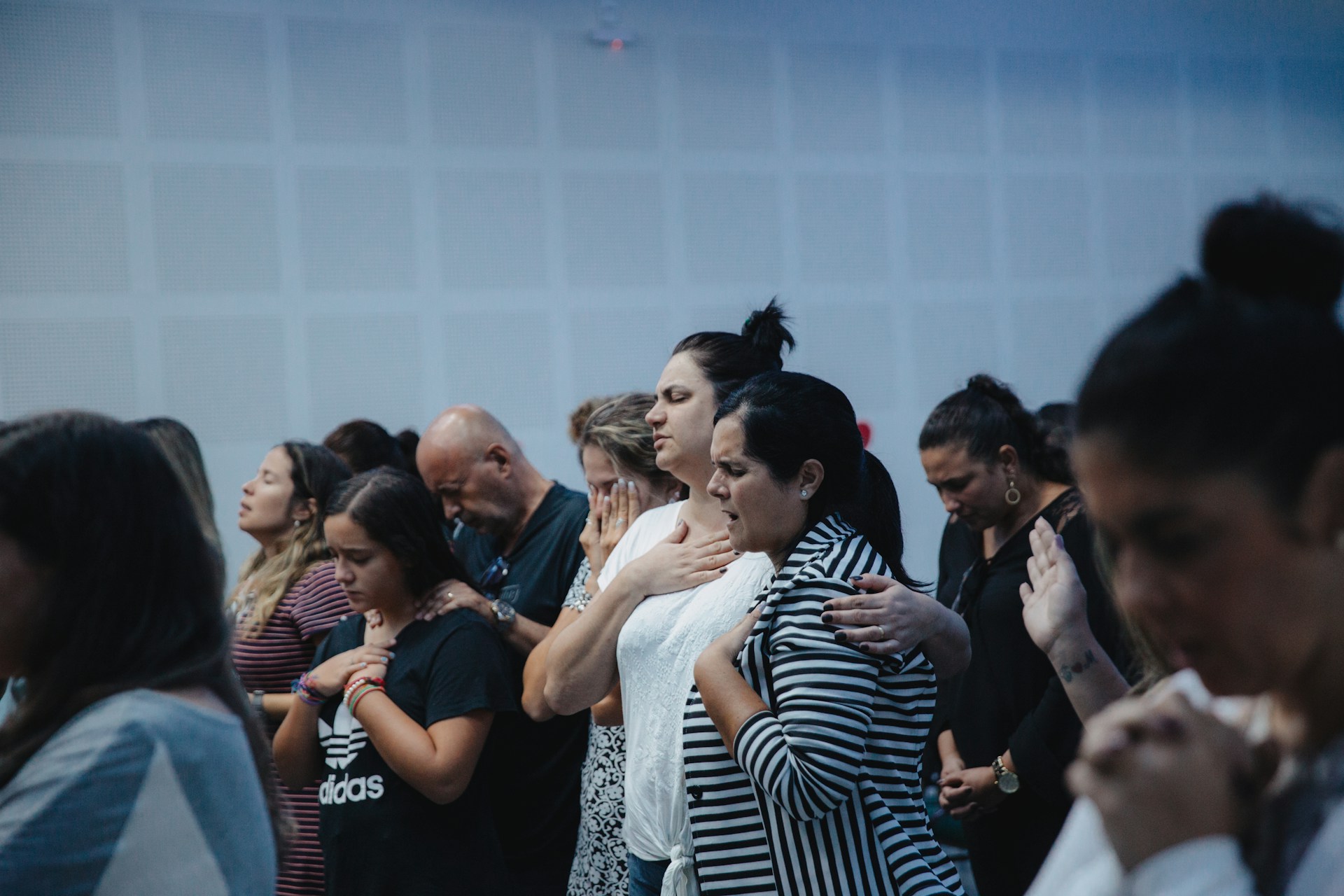
Many church plants start their software evaluation with a simple question: Which option is the cheapest?
But the question that church plants should be asking is which church management software is going to meet your needs today and in the future?
What church plants need from church management software
Strip away the feature sheets and a new church needs three things from its software before anything else:
- Online giving that works on a phone in seconds: your first-time guest decides whether to give while the offering is still being explained. If a gift takes more than a few taps, you’ve already lost it.
- One member record from the first contact: the family that visited, the volunteer who signed up, and the donor who gave should be the same profile, so their information isn’t split across three systems.
- Communication without a bunch of logins: text messaging, email, and church app notifications pulling from the same member list you already keep.
Notice what’s missing. Worship-planning suites, advanced facility scheduling, multi-campus check-in. Those tools matter later. Buying for the church you’ll run in five years is how plants end up paying for management features they can’t use yet. But launching purely for today results in migrating everything in eighteen months.
The move that saves you is picking a platform whose floor fits a plant and whose ceiling fits the church you’re praying toward.
Two features you’ll grow into faster than you expect are events and groups. Your public launch is an event, your volunteer huddles are events, and the small groups you start in month three become the engine of engagement for a young church.
Software that lets you create and manage events, handle attendance tracking, and organize groups from the same member records saves you from bolting on another tool later. It won’t be day-one urgent. But it sits just behind giving and communication on the list of features a plant actually uses.
The best church software for church plants in 2026 at a glance
Seven platforms come up most when planters ask what software to adopt. Here’s the honest shape of each, minus the marketing. As you read, compare the same features across every platform. Online giving and member management come first. Then events, groups, and communication. Then the church app and website. Then reporting and integrations that tie everything together. These are the tools a plant leans on, and the ones worth lining up side by side before you spend your money or time.
| Platform | Best known for | Strongest for a plant | Where it falls short | Pricing model |
|---|---|---|---|---|
| Subsplash | Custom church app, church website, and media | A polished branded app and sermon media from day one | Management depth sits behind the app-and-media focus; a custom build gets pricey | Quote-based bundles, plus giving transaction fees |
| Tithe.ly | Affordable all-in-one giving and management | Low entry cost, quick online giving setup, donor-covers-fee option | Lighter customization and reporting; limited international bank support | Free-to-low monthly plans, plus per-transaction fees |
| Planning Center | Modular operations and worship planning | Best-in-class service planning and check-in tools | Costs stack as you add modules; giving and app are separate pieces | Pay per module, scales with people count |
| Breeze | Simple, flat-rate church management | Fast to learn, predictable flat price, clean contribution tracking | Thin on volunteer scheduling, custom apps, and integrations | Flat monthly rate regardless of size |
| ChurchTrac | Budget church management software | A free tier under 100 people and paid plans from a few dollars a month | Dated interface, limited communication tools and reporting, North America only | Free tier, then low monthly plans by member count |
| ChMeetings | Affordable all-in-one ChMS for a global church | Member management, events, and online giving at a low price, in 20 languages | App and texting are paid add-ons; less US brand recognition | Free for tiny churches, low monthly plans, paid add-ons |
| Pushpay® (ChurchStaq®) | One integrated platform for giving, people, and app | Full platform from launch, free for 12 months for qualified plants, no migration as you grow | Grant eligibility runs to plants tied to a recognized planting network, roughly 6 to 18 months pre-launch | Free grant year for qualified plants, then standard pricing |
Prices shift and every quote depends on your size and add-ons, so read the pricing column as a model, not a number to hold anyone to. Now the details, platform by platform.
Why Pushpay invests before your first Sunday
Pushpay’s answer to the planter’s dilemma is to take the money question off the table for the first year. Qualified pre-launch plants, roughly six to eighteen months from their public launch and affiliated with a recognized planting network, can receive the full Pushpay platform free for twelve months, including online giving powered by Everygift®, the ChMS, and a church app. Not a stripped starter tier or a trial. The same platform running behind 84 of Outreach’s top 100 churches, handed to a church that hasn’t held its first service.
The thing that sets Pushpay apart is the giving infrastructure.
Everygift simultaneously secures at-risk gifts while increasing future generosity, to the tune of $213 million annually for churches. For a plant living gift to gift, these features are powerful drivers of reliable donations. Second, the ChMS surfaces who’s drifting before they’re gone. For a church that is just getting started, catching that a regular attender has gone quiet for three weeks is the difference between a connection and an empty seat.
Churches that switch to Pushpay grow their recurring donors by 24% on average, and a plant that never had to switch skips that disruption completely. The grant also comes with a cohort community of other plants, dedicated support through launch, and a Recurring Giving Playbook built for pre-launch ministry. The ChMS ties your giving, groups, and ministry data to one member profile, so the information a pastor needs stays one search away instead of scattered across tools.
Connect Christian Church experienced this for themselves. The church in Carl Junction, Missouri runs around 400 active members and decided years ago not to sink millions into a bigger building, choosing instead to plant smaller campuses and connect their community through technology. When they launched their newest campus in an eight-block neighborhood with zero churches, starting with just fifty people to serve that community, their church app did the early work of building engagement: giving, sermon notes, and daily devotionals in one place. “The app helps us all stay on the same page, whether you’re in the room or not,” says Kenan Klein, their worship and student minister.
For a church plant, having everyone connected from day one is the starting point of a successful launch.
Subsplash
Subsplash built its reputation with a church app. If your plant’s strategy leans hard on media, a branded mobile experience, and streaming that looks professional from day one, Subsplash is strong ground. Sermon content gets tagged and personalized to each user, online giving is woven into the church app and the live stream, and the finished product looks polished and drives engagement.
Subsplash also offers a matching church website and media hub, so your content lives in one connected place. For a media-forward launch, few church app tools match Subsplash, including its streaming and content library.
The trade-off shows up in two places. Cost is one: with a fully custom-branded church app, you get what you pay for. The other is emphasis. Subsplash is an app and media company first, and its church management depth (the member database, group tracking, the check-in workflows a growing church leans on) sits a step behind that focus. Integrations exist, but the platform is built to keep you inside the Subsplash content experience.
For a plant whose center of gravity is media, that may suit you well. For one whose main need is knowing who showed up and following up, weigh that focus before committing. None of that makes Subsplash a weak choice. Subsplash builds around the church app and the media content experience, and the plant that wants exactly that will be glad it picked Subsplash.
Tithe.ly, ChMeetings, and all-in-one management
Two platforms pitch the same promise to a young church: everything in one place, at a price a plant can stomach. These two just get there differently.
Tithe.ly and Tithely giving features
Tithe.ly answers the question every planter asks first: how little can we spend and still look legitimate? Entry plans start free or close to it, online giving is quick to set up, donors can cover the fee on their donations, and you get a broad spread of features including giving, events, and a church website builder without a big upfront commitment. Tithely has leaned into affordability for years. Tithely also offers church management features, so a plant can create member profiles, run groups, and handle messaging and communication in one system.
Where Tithely thins out is under load. The backend is less customizable than heavier platforms, reporting stays basic, integrations are limited, and churches with international bank needs hit limits. None of that sinks a young plant. It surfaces over time, once you’re running real volume and you want the reporting or automation to do more than Tithely was built for.
ChMeetings ChMS for member management and events
ChMeetings is the value play. More than 7,000 churches use this ChMS, drawn by a long feature list at a low price. Member management and online giving sit at the core. Church accounting, attendance tracking, and event organization for free or paid events round out the tools, and leaders can create events, manage donations, and handle communication from one place. A secure member portal gives your congregation somewhere to log in, join groups, and update their information. ChMeetings runs in 20 languages, which makes it one of the few options here built for churches outside North America, and a free version covers churches up to 50 members, so a plant can start at zero.
The catch is where ChMeetings puts its best pieces. The mobile app and text messaging are paid add-ons rather than part of the base plan, so the cheap headline price creeps up once you want a church app and SMS messaging. And in the US, where most planters compare it against Tithely or Breeze, ChMeetings carries less brand recognition and a thinner integrations bench. For the right plant, especially a multilingual or international one, it provides a lot of church management for the money.
Planning Center, Breeze, and ChurchTrac
Three more platforms, three different philosophies: modular depth, deliberate simplicity, and rock-bottom price.
Planning Center and its modular tools
Planning Center’s service-planning features are the best in the category, the check-in system is close to an industry standard with attendance tracking built in, and the member database is excellent. Planning Center offers the People module free and lets you add other tools as you need them, which sounds tailor-made for a plant. It also handles groups, events, and giving as separate modules, with a Publishing tool for your church website and registrations for the ministry calendar.
Adding modules over time is where Planning Center gets expensive. Each Planning Center module, including Services, Giving, and Check-Ins, is priced on its own and scales with your headcount, so the “only pay for what you use” promise quietly grows as you switch tools on. A plant that starts with two Planning Center modules and grows into five feels every addition, and the deeper features and integrations with worship tools assume you’re all in. Because giving and the church app are individual pieces rather than one experience, your congregation’s day-to-day use can feel stitched together. The depth Planning Center provides is real, but so is the assembly required, and Planning Center’s reporting is lighter than the planning tools would suggest.
Breeze for simple church management
Breeze is the church management software small churches recommend to each other, and it earns that word of mouth. Flat monthly pricing with no per-head penalty, a user-friendly interface, responsive support that helps you get unstuck, plus online giving and text giving with clean donation and contribution tracking, and year-end statements you can create in a few clicks. For a plant that wants management handled without a learning curve, Breeze is hard to beat on simplicity.
That simplicity has a ceiling, and Breeze doesn’t hide it. Volunteer scheduling is light, there’s no deep church app or website tools, and integrations and advanced customization aren’t the point of the product. Breeze provides the basic features well and stops there. If you know you’re staying one site, it fits. If you’re planting with expansion in view, you’ll likely outgrow Breeze and face a migration right when you have the most member records to move.
ChurchTrac on a tight budget
ChurchTrac wins on price, full stop. It offers a free tier for churches under 100 people and paid plans from just a few dollars a month for up to 75 users, which makes ChurchTrac the cheapest serious church management software a plant can pick. The core feature set is solid, including member management, giving, and donation tracking at the base. Attendance, check-ins, and worship planning come in on the higher plans. Support gets high marks for being fast and human, and users find the tools easy to learn thanks to helpful onboarding resources.
The low price comes with real tradeoffs, and ChurchTrac is honest about who it’s for. The interface feels dated, the reporting features are restrictive, and there’s no support for churches outside North America. For email and text messaging, ChurchTrac’s communication tools help with the basics, and the software organizes services and events without fuss, but some integrations cost extra on top of the plan. For a plant that mainly needs member management and giving on a shoestring, ChurchTrac provides plenty. For one that wants a modern church app and rich communication built in, it will feel thin.
How to choose the best church software for your plant
The real cost of “right size for now” is the switch you’re signing up for later. Every planter who has migrated a giving platform mid-stride will tell you what it takes: re-entering donor payment details nobody wants to re-enter, reconciling two years of records, retraining a congregation that finally learned the last church app. Start on a platform you won’t outgrow and you pay the setup cost once, at the beginning, when you have the fewest member records to move and the most time and patience to learn.
So how do you choose? Match the platform to your ministry’s trajectory, not your launch-week budget. Media-and-app-first strategies fit Subsplash. When the only goal is getting online giving live for as little as possible, Tithely, Breeze, and ChurchTrac all do it cheaply, with Breeze leaning toward simple management, Tithely toward broad all-in-one basics, and ChurchTrac toward the lowest price. Planning Center rewards teams that live in service planning and don’t mind assembling modules. ChMeetings fits a multilingual or international church that needs a low-cost ChMS. And a plant that wants one platform to launch on and still be running at ten times the size, without paying for it during the hardest financial year, is the church the Pushpay grant was built for.
The window that matters most is the one you’re in right now, before launch. Setup decisions are cheapest and cleanest when you have fifty member records instead of five thousand and a team that can learn the system over coffee instead of mid-crisis. If you’re six to eighteen months out and tied to a planting network, the church plant grant covers the full platform for your first twelve months, so start there and build the foundation while it’s still small enough to build easily.
FAQ
What is the best all-in-one church software for a church plant in 2026?
For a plant that wants to launch on real infrastructure and never migrate, the best fit is one integrated platform covering online giving, member management, and a church app, all keeping member information in one place. The Pushpay church plant grant makes that reachable by covering the full platform free for a qualified plant’s first twelve months. That same platform leaves room for events, groups, and media content as your ministry and engagement grow. If media and app design are your whole strategy, Subsplash is worth a look. If the lowest possible price decides it, ChurchTrac, Breeze, and Tithely all get giving live cheaply. Most of these platforms also build you a basic website.
Which church software is easiest for a church under 100 people?
For pure simplicity, Breeze and ChurchTrac lead: flat or near-free pricing and almost no learning curve. ChurchTrac even runs free under 100 members. Heavier systems like Planning Center or the Pushpay platform give you more, but they ask a little more of the user up front. If you expect to grow past a single site, you’ll likely move to one of them later, so weigh ease today against a migration tomorrow.
How should a church plant compare pricing and contracts?
Look past the monthly sticker. Ask what scales (per-head fees, per-module charges, transaction rates on donations), what a migration would cost in two years, and whether the pricing model punishes growth. A flat rate is predictable. Modular pricing rewards small starts but climbs as you add features. Quote-based pricing means you won’t know your real number until you’re on a call. And check what’s actually included, since a cheap base plan with paid add-ons, including an app or texting, can cost more than an all-in-one platform.