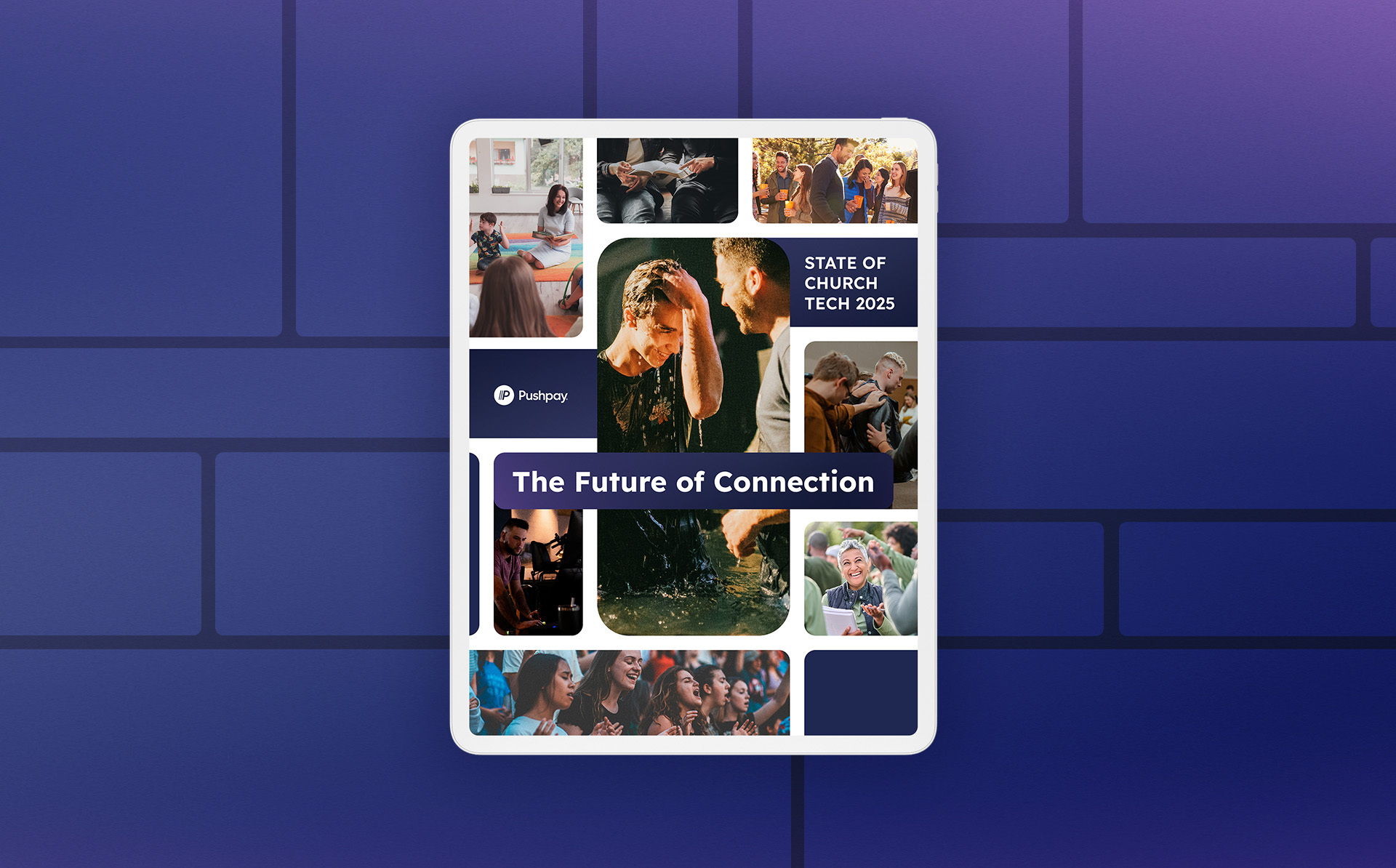
These results reflect the opinions of over 1,700 church leaders from every corner of the country. We ask many of the same questions each year to identify shifting trends, but also remain intentional about including new queries that address the evolving landscape of modern technology. This year’s results provide valuable insights into the tech that’s relied upon to shape ministry, the digital solutions that are being prioritized more than ever, as well as where leaders like yourself are committing resources to lay the foundation for a bright future.
Technology’s role in connecting people
This year’s report is titled “The Future of Connection” for a reason. Just about every data point reinforced the idea that digital solutions tighten communities, rather than drive them apart. For the first time ever, we asked specific questions about tech’s role in connection, building faith, and its impact on loneliness. As you’ll see in the report, the results are overwhelmingly positive.
AI’s growing role in ministry
Like virtually every other forward-thinking organization in 2025, the Church is adopting artificial intelligence tools for a wide variety of use cases—but not every use case. Leadership teams around the country are being incredibly intentional and consistent in how they’re using this emerging technology. The patterns are fascinating and, most importantly, in line with the core mission of the Church.
Younger generations are re-engaging
According to Pew research released earlier this year, church engagement has stopped falling year-over-year. That amazing turnaround can primarily be attributed to Millennials and Gen Z. What our State of Church Technology report found, however, is that these younger adults—who, keep in mind, will define the future of the Church—are being very selective about which types of ministries they engage with.
 Search
  1-844-PUSHPAY