RESOURCE
Church Tech Check
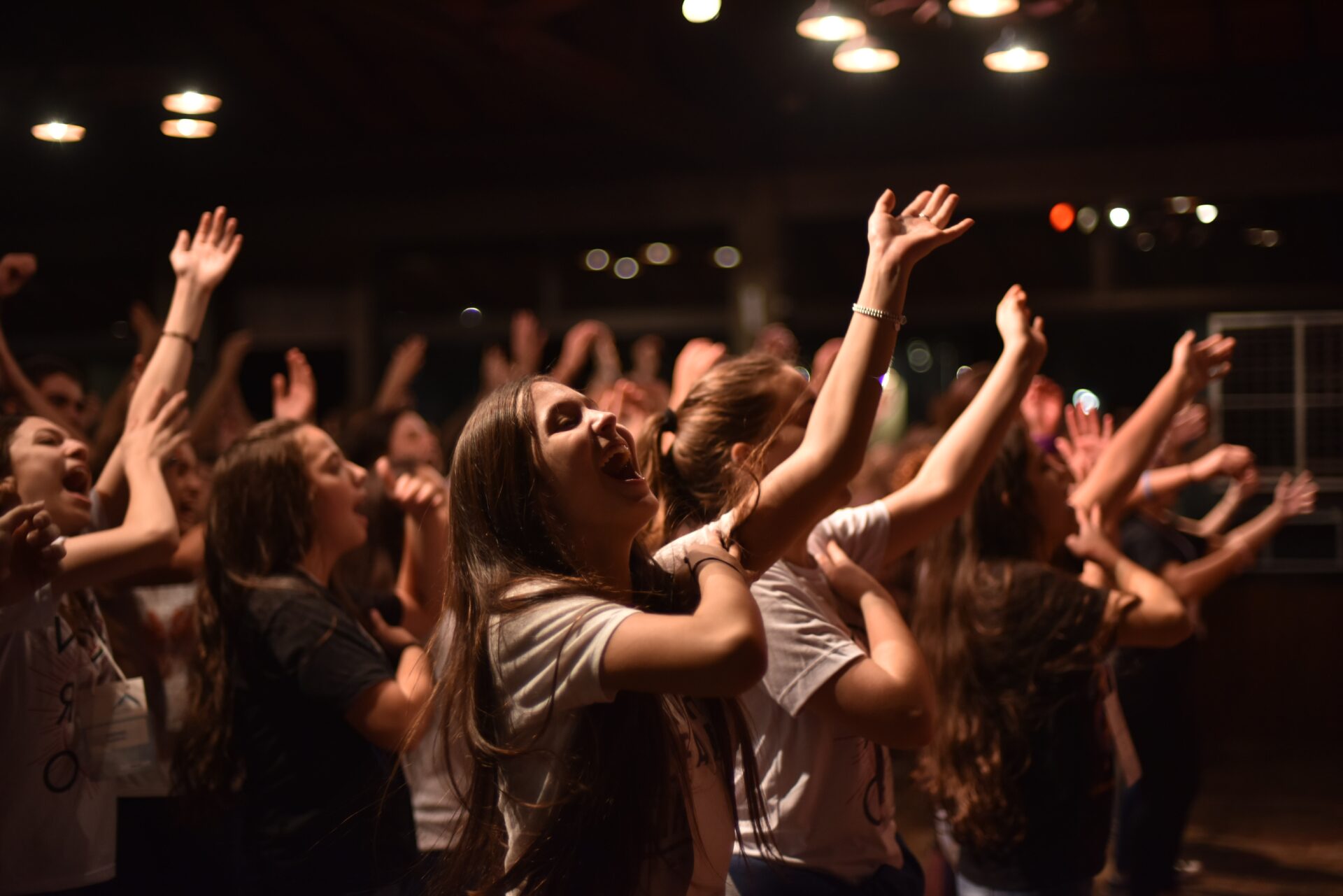
For those leading Catholic communities, the heartbreak of watching young adults slip away is deeply familiar. For decades, the narrative in our parishes felt like one of irreversible decline, and every new study seemed to echo the same heavy conclusion: younger generations were walking away from organized religion, and the Church was powerless to stop it.
But as pastoral leaders kept praying, that story began shifting in ways we haven’t seen in a generation.
New data reveals something truly beautiful stirring beneath the surface. The young adults who remain Catholic—and the rapidly growing number choosing to become Catholic—are showing up with a frequency and intensity that surpasses every older generation. They are seeking out the sacraments in numbers dioceses haven’t witnessed in over a decade.
What makes this moment so profoundly important is the reality that what happens next will determine whether this becomes a lasting spiritual home for them, or just a fleeting footnote in their lives.
The shift is undeniable. According to the Barna Group, Gen Z and Millennial churchgoers are now the most frequent in-person attendees in the United States. Gen Z averages 1.9 weekends per month—about 23 services per year. Millennials follow closely at 1.8 weekends. Baby Boomers, by comparison, are attending roughly 17 services annually (Barna Group). As Daniel Copeland, Barna’s vice president of research, noted, young adult attendance has nearly doubled since 2020 (Barna Group).
Within Catholic parishes, this pattern is even more striking. Among young adult respondents, 50% attend Mass daily or weekly, and 84% attend at least a few times a year. They are also the age group most likely to seek out Confession, spend time in Eucharistic Adoration, and show up for parish social events (Catholic Review).
Church attendance by generation
| Generation | Monthly avg. | Annual avg. | Key trend |
| Gen Z (1997–2012) | 1.9 weekends | ~23 services | Highest frequency; nearly doubled since 2020 |
| Millennials (1981–1996) | 1.8 weekends | ~22 services | Strong digital giving adoption |
| Baby Boomers (1946–1964) | 1.4 weekends | ~17 services | Declining; slowest post-pandemic return |
Sources: Barna Group; Leadership Roundtable; America Magazine. Note: Barna attendance data reflects cross-denominational Christian churchgoers; Catholic-specific engagement data drawn from Leadership Roundtable.
It’s important to note that the overall share of Americans identifying as Catholic hasn’t suddenly skyrocketed. What has changed is the heart of the people in the pews.
The era of “cultural Catholicism” (identifying with the faith out of familial obligation) is largely over. The young adults sitting in the pews today are there because they choose to be.
To welcome them well, parishes need to understand why they are returning. Their motivations look very different from previous generations, largely because they are responding to a deeply secular, exhausted modern culture.
In a world defined by digital superficiality and endless algorithmic feeds, young adults are craving the community found in the Body of Christ, the discipline of the Faith, and the personal transformation that happens through the power of the Holy Spirit.
The Church offers a tangible pathway to the divine that stands in stark contrast to the utilitarianism of their daily lives.
They also aren’t looking for a watered-down message. They crave authenticity over accommodation, attracted to the Catholic Church precisely because it offers a counter-cultural way of life centered on humility, self-sacrifice, and objective truth.
Finally, the proliferation of high-quality Catholic theological content online acts as a powerful digital apologetics tool. Podcasts and YouTube videos are answering their complex philosophical questions and building a bridge of trust before they ever step foot in a parish.
If young adults are the most engaged demographic, Lent and Easter are the most critical pastoral moments to reach them.
Ash Wednesday is not a holy day of obligation, yet it consistently produces the third-highest Mass attendance of the year—and the highest participation rate among young adult Catholics. Mark Gray, director of polls at CARA, stated it perfectly: “If there’s any moment that the Church has to reach out to young adult Catholics, Lent and specifically Ash Wednesday is the time” (St. Louis Review).
The 2025 Easter season proved this is far more than just a holiday obligation. Dioceses across the country reported staggering increases in conversions and individuals entering the Order of Christian Initiation of Adults (OCIA) (National Catholic Register; Catholic World Report):
2025 conversion growth by diocese
| Diocese / Archdiocese | 2025 converts | YoY increase | vs. pre-pandemic |
| Los Angeles, CA | 5,500+ | +45% | Highest in over a decade |
| Rockford, IL | 743 | +41% | +64% vs. 2019 |
| Detroit, MI | 977 | +23% | +70% vs. 2022 |
| Steubenville, OH | 106 | +39% | +16% vs. 2019 |
| Baltimore, MD | 778 | +17% | +22% vs. 2019 |
Sources: National Catholic Register; Catholic World Report
Father Juan Ochoa of the Archdiocese of Los Angeles captured the scale of this beautifully: typical year-over-year growth runs about 10%. In 2025, it hit 45%—driven partly by a post-COVID period of reflection that led many to finally act on the spiritual questions they had been carrying for years (Catholic World Report).
While diocesan reporting typically doesn’t segment these new converts by age, the broader generational attendance data strongly suggests young adults are the primary engine behind this incredible surge.

Traditional hospitality—a handshake at the door and a paper bulletin—yields a roughly 15% visitor retention rate (Church Brand Guide). Put plainly: for every 100 people who walk through the doors on Easter Sunday, 85 may slip away.
Why? The reasons are deeply interpersonal. Lifeway Research found that 32% of young adults who left church cited “judgmental or hypocritical” congregants as a primary reason. Among Millennials who don’t attend, 85% perceive Christians as hypocritical (Barna / Lifeway Research). Furthermore, this is a generation shaped by a culture of “ghosting.” If they feel unseen or unwelcome, they won’t write an email or ask for an exit interview. They just quietly disappear.
Smiling ushers and a warm homily aren’t enough to combat this. How do you build deep, authentic relationships when hundreds of visitors walk through the doors on a single Sunday? How do you prove that the community is deeply loving and invested in them?
Parishes have to reach out. And they have to do it fast.
Parishes have 48 hours. If someone from the parish reaches out to a first-time visitor within that window, the return rate jumps 70% compared to communities that delay (Church Brand Guide). Wait longer, and the moment fades.
Helping a first-time guest make seven personal connections makes them 80% more likely to come back. Getting a visitor into a small group, a parish social, or a ministry within 30 days makes them four times more likely to stay (Church Brand Guide).
Yet, the Catholic Leadership Institute’s Disciple Maker Index found that only 47% of young Catholics strongly agree that their parish makes them feel welcome and accepted. Focus groups revealed a simple, beautiful desire: they want someone to personally reach out when they join, and they want spaces where relationships can move beyond the surface (Catholic Leadership Institute).
This is where parishes must bridge the gap between spiritual desires and everyday logistics.
It can feel jarring to talk about the Eucharist and authentic relationships in one breath, and text messaging or software in the next. To be clear: automated texts and digital giving do not save souls. Real, face-to-face pastoral relationships do.
But technology serves as the invisible scaffolding that allows those relationships to happen. When a youth minister is buried under paper connect cards, or a pastor doesn’t even know a young family visited, people slip through the cracks. They feel ignored, which reinforces their fear of an uncaring church. Using technology thoughtfully buys parish staff the time and the logistical awareness to actually facilitate the human connections this generation so desperately craves.
For Gen Z and Millennials, a parish that operates as an “analog island in a digital sea” feels disconnected from their reality (Dr. Larry Witzel, “The Digital Transformation of Church Communication”).
Church emails average a 25% open rate (Lifeway Research). For Gen Z, email is a formal workplace tool, not a place for community connection. Texts, however, hit a 98% open rate, with 90% read within three minutes (ResourceUMC; Intradyn). The average response rate is 45%, and 83% of consumers prefer texting for organizational communication (Notifyre). Sending a warm, authentic text is how a ministry leader gets their foot in the door to invite someone to coffee.
In 2025, among 1.8 million first-time church donors tracked globally by Pushpay, 58% used Apple Pay to complete their gift (Pushpay / GlobeNewsWire). Digital wallets allow for spontaneous generosity without the barrier of digging out a credit card. Recurring giving now accounts for 42% of all digital donations, yet nearly half of all churches still don’t offer automated recurring options (Ministry Brands). This isn’t just a tech issue; it’s a stewardship issue.
This Lent and Easter present a massive opportunity. Here is how a thoughtful, pastoral approach naturally unfolds in a parish setting.
Pastors might encourage daily prayer challenges through apps like Hallow, or use SMS to send a short, encouraging two-sentence reflection every Wednesday. By implementing these digital habits, members of your congregation will start to feel a warm, consistent connection to the parish’s voice.
According to Barna Research, 46% of non-Christians do not understand the theological significance of Easter. When a curious seeker visits a parish website on Holy Saturday, he shouldn’t just see a Mass schedule. They need to find a welcoming message explaining exactly where to park, what to expect, and a brief, beautiful explanation of why Easter matters.
Instead of asking visitors to fumble for a pen and a paper card while juggling a toddler, a parish can place a simple QR code in the pew. A visiting family can scan it and fill out a brief welcome form on their phone in 30 seconds before Mass begins, allowing them to instantly connect without distraction.
Once that family or individual submits their information, the details naturally populate the church management system and alert the pastoral team. Because these tools talk to one another, the young adult minister receives a direct notification. Let’s play out a hypothetical scenario of what the next steps could look like:
On Monday afternoon, he sends a quick text: “Hey John, so glad you joined us for Easter Mass at St. Jude’s! I’d love to buy you a coffee this week and hear a bit of your story. – Mike, Young Adult Ministry.” John now feels seen by the Church. He feels like he is more than a face in the congregation, he replies a few hours later, and they set up a time for Thursday morning. At that Thursday coffee, Mike takes the next natural step and personally invites John to an upcoming parish social or a small group. The ultimate goal is moving someone from an anonymous visitor to a known community member.
The data heavily supports this relational approach. Churches using a multi-week text follow-up sequence achieve a 56% retention rate for guests (Text In Church). Platforms equipped with two-way messaging consistently hit 50% visitor retention—vastly outperforming the 15% baseline of traditional methods (Text-Em-All). Furthermore, data confirms that inviting a guest to take a concrete next step within 30 days makes them four times more likely to become regular parishioners (Church Brand Guide).
One of the greatest challenges in parish ministry is finding the time to do the actual ministry. Parish staff often spend so much time fighting with disconnected spreadsheets, paper records, and clunky software that it becomes difficult to focus on the person standing right in front of them.
The 2024 Catholic State of Church Technology report found that 43% of parishes evaluate their technology only reactively—when something breaks (Pushpay / Crux). This leaves parish staff exhausted and visitors feeling unseen.
The answer lies in tools designed to shoulder that administrative burden. Resources like ParishStaq by Pushpay are built specifically to help Catholic parishes bring these everyday tasks into one organized place. It connects digital giving (including Apple Pay and Google Pay), text and email communication, automated follow-up steps, and sacramental record management. The impact is real, and it works naturally for parishes of any size.
In 2025 alone, Pushpay supported over 14,000 churches in processing 53.6 million gifts. For Catholic parishes specifically, ParishStaq quietly managed the digital importation of 5.6 million sacramental records and supported the recording of 53,000 new sacraments (Pushpay / GlobeNewsWire).
When a parish’s communication tools work quietly in the background, leaders aren’t just managing data. They are freeing up their pastoral team to do what they were called to do: love people, build relationships, and walk with them toward Christ.
Parishes prayed for them to come back, and they are. Young adults are returning to the Catholic Church with an intentionality and a hunger for the Eucharist that is incredibly inspiring. They are filling OCIA classes and lining up for Confession.
But their tolerance for slipping through the cracks is low. If they feel unseen or bogged down by administrative barriers, they will quietly step away.
The parishes that will thrive in this moment are the ones that meet young adults where they are. They offer the deep, beautiful truths of the Catholic faith. And they support those truths with the thoughtful, genuine communication this generation is accustomed to.
The data is clear, and the tools are available. The only question is whether parish communities will be ready to truly see them, know them, and walk with them when they walk through the doors this Lent and Easter. Equipping a parish with the right tools isn’t just an administrative upgrade. It is a profound act of hospitality that removes the barriers so that every seeker has the chance to find a permanent spiritual home.
Discover how ParishStaq helps Catholic parishes build a seamless path from first visit to lifelong belonging.
Sources