 Search
  1-844-PUSHPAY
 How pastors can boost recurring donations with the right tools and features
Learn how pastors can boost recurring donations with simple tools, smart features, and clear communication that grow generosity.
Pastors are constantly balancing the tension between shepherding people and keeping ministry operations sustainable. When generosity rises and recurring donations become a norm, you get the best of both worlds: your church’s mission stays fully funded, and your members experience the discipleship that comes from consistent giving.
The challenge is that recurring gifts don’t just “happen.” They’re shaped by the tools you provide, the communication you choose, and the features that make giving simple for every donor.
Let’s walk through how your church can boost recurring donations with the right mix of strategy and technology.
Why recurring giving matters for ministry
Recurring gifts solve problems that nearly every church faces:
- Predictable ministry planning: When funds arrive on a regular rhythm, you can confidently budget for staffing, outreach, and new programs without second-guessing cash flow.
- Less friction for donors: Members can set up automatic tithes or recurring gifts through a credit card or ACH and never worry about missing a week.
- Stronger pastoral care: With a reliable base of recurring donors, you can identify trends, thank people personally, and respond when someone pauses or reduces their gift.
Think of it this way: recurring donations create stability for your church while deepening the spiritual habit of generosity among your congregants.
Start with an audit of your current giving experience
Before you add new tools or features, it’s important to take a step back and see your church’s giving experience through the eyes of your donors. Begin by mapping every possible onramp to generosity. Can someone give during an in-person service, while watching a livestream, or through your website? Is there an option in your church app or via text-to-give? Even seasonal events should be considered, since each moment represents an opportunity for someone to participate.
Next, test the giving flow yourself. From the moment a donor decides to give, how many steps are required to complete the process? Every extra click or confusing field increases the chance they’ll abandon the donation altogether. A smooth, mobile-first experience often makes the difference between a one-time giver and a recurring donor.
It’s also worth looking closely at the payment options you currently offer. If your system only accepts credit cards, or if transaction fees are unclear, some members may hesitate to set up recurring donations. Offering multiple options, including ACH, reduces those barriers and helps people feel more comfortable committing to consistency.
Finally, examine your data. How many of your donors are enrolled in recurring giving right now? What percentage of those gifts fail due to expired cards or outdated information? And how do you track when someone pauses or stops their recurring donation? These insights will highlight gaps in your process and reveal the friction points that may be holding donors back.
A simple audit like this often uncovers bottlenecks that keep recurring giving from reaching its full potential.

Tools and features that grow recurring donations
Once you’ve mapped the gaps, here are the features pastors and teams should prioritize when selecting or upgrading a church giving platform:
- Flexible schedules: Weekly, biweekly, monthly, or custom dates that match how people budget.
- Saved payment methods: Let donors quickly update bank accounts or credit cards without contacting staff.
- Fee options: Encourage ACH, let donors cover transaction fees, and always display transparent totals.
- Mobile-first design: Donation forms should work beautifully on a smartphone—fast, clear, and distraction-free.
- Multiple giving channels: Text-to-give, app, web embeds, and QR codes in bulletins or livestreams.
- Campaign and fund choices: Donors should easily select between tithes, special funds, and fundraising campaigns.
- Smart nudges: Gentle prompts that invite a donor making a one-time gift to consider setting up a recurring plan.
- Automated receipts and giving statements: Receipts are automatic; year-end, IRS-compliant giving statements can be generated and delivered digitally.
- Analytics and insights: Pastors and admins need visibility into recurring trends, donor churn, and campaign progress.
Every one of these features reduces friction, builds trust, and makes recurring giving the natural option.
How Pushpay makes this simple
Pushpay’s giving platform was designed with churches in mind, making recurring donations both easy for congregants and impactful for ministry teams. With ChurchStaq, pastors and administrators have access to fully integrated systems that combine giving, communication, and church management tools in one place. This means financial data isn’t siloed, donor engagement can be tracked alongside ministry activities, and staff spend less time toggling between platforms.
At the same time, Pushpay’s Everygift solution is quietly at work encouraging one-time donors to consider recurring gifts. Instead of relying on manual asks from staff, the system uses smart, contextual prompts that invite donors to take the next step toward consistency. This not only grows generosity over time but also creates a steady financial foundation for ministry planning.
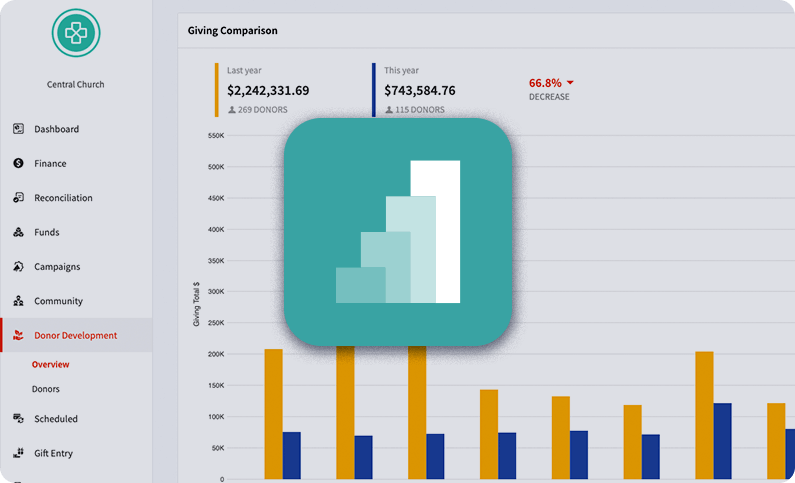
For leaders who want a clear picture of how generosity is trending, Pushpay Insights brings giving and engagement data together in dashboards you can act on. It highlights recurring participation, lapsed donors, and overall progress toward campaign goals. This visibility allows pastors to celebrate wins, spot challenges early, and share tangible results with boards and finance teams.
Communication is another area where Pushpay shines. With built-in text and email tools, pastors can automatically thank donors, send reminders to update payment information, or celebrate milestones in generosity. With Resi embedded in the app, viewers can watch the livestream and engage with other in-app elements like Giving and Impact Cards side-by-side.
Finally, administrative relief is baked into the system. From failed payment recovery and expiring-card alerts to secure storage of giving records and export-ready reports, finance teams save hours of manual work every month. Pastors enjoy the peace of mind that comes with steady recurring giving, while staff gain valuable time back to focus on people and ministry instead of paperwork.
Communicating recurring giving to your church
Technology sets the stage, but it’s the way pastors and leaders communicate recurring giving that inspires people to embrace it. Cast the vision clearly by teaching the “why.” Recurring giving should be framed not only as a financial tool but as a discipleship practice—an intentional step that helps members grow in generosity and participate in the ongoing work of the church.
Clarity is your best ally. Use simple language in services, emails, and classes. A phrase as straightforward as, “Choose monthly to support ministry every week of the year” communicates the benefit without overcomplicating the message. Pair this with stories that show the real-life impact of recurring gifts—how consistent support funded a youth mission trip, kept a food pantry open, or helped launch a new church service.
It’s also essential to address the questions people often carry. Concerns about fees, security, or how to adjust a recurring gift can keep someone from signing up. When you proactively explain that gifts are secure, donors can update their own payment methods, and fees can even be covered by the giver if they choose, you reduce hesitation.
When recurring giving is presented as both a spiritual step and a practical support for ministry, members feel confident stepping in.
Creating clear on-ramps for donors
Recurring donations don’t become a church-wide habit by accident. You’ll need to provide clear, consistent ways for members to start the journey.
In your weekend services, that may look like a brief invitation during the offering moment accompanied by a text-to-give keyword or a QR code on screen. Online, it’s critical to have a well-designed “Give” page on your church website and an option in your mobile app where members can easily set up a recurring donation. For new members or those walking through discipleship milestones, recurring giving can also be introduced in pastoral care settings like membership classes, small group launches, or baptism preparation.
The key is visibility and consistency. When recurring giving options are woven naturally into both your in-person and digital experiences, they become part of the rhythm of church life.
Follow up to strengthen relationships
Once someone commits to recurring giving, the way you follow up determines whether generosity feels transactional or relational. A simple thank-you within 24 hours—whether by email, text, or even a short personal note—shows donors that their gift matters. Over time, regular encouragement keeps them connected to the impact of their giving.
Consider sharing a story once a month that ties generosity to real ministry outcomes, such as a community outreach event or a child sponsored through missions. Every quarter, provide a bigger-picture update that highlights campaign progress and celebrates what God is doing through the church. And when the year comes to a close, accompany IRS-compliant giving statements with a heartfelt pastoral message of gratitude.
This rhythm of communication transforms recurring giving into a source of joy. Donors don’t just see money leaving their account—they see lives being changed and ministry advancing because of their faithfulness.
Measuring success and staying encouraged
Pastors and finance teams should track:
- Percentage of donors giving on a recurring schedule
- Average recurring gift size
- Donor churn and failed payments
- Fundraising campaign progress
- Channel performance (text, app, web, livestream)
When you can see recurring donations growing, it not only stabilizes the budget but also encourages your congregation that their gifts are making a tangible impact.
Take the next step
Recurring giving doesn’t just reduce financial stress—it creates room for your church to dream bigger, serve more people, and build a culture of generosity that lasts.
If you’re ready to see how Pushpay can help your church simplify giving, increase recurring donations, and support your ministry, schedule a personalized demo today.
FAQ
How do recurring donations help churches?
Recurring donations give churches financial stability. Instead of wondering if gifts will come in from week to week, pastors can plan ministry with confidence, knowing funds will arrive consistently. This steady flow of generosity also makes it easier to budget for staff, outreach, and events.
Will donors still be able to give one-time gifts?
Yes. A strong church giving program should support both one-time and recurring gifts. Many donors start with a one-time donation before moving to a recurring gift when they see how easy the process is.
Are online giving platforms secure?
Pushpay’s church giving software is PCI compliant and uses encrypted transactions to ensure donations are safe. Donors can trust that their personal and financial information is fully protected.
What about transaction fees?
All digital giving platforms include transaction fees, whether through credit card or ACH (bank transfer). However, with Pushpay, donors have the option to cover fees themselves, and ACH often comes at a lower cost than cards. This flexibility means churches can retain more of each gift while still offering convenient giving options.
How can donors update their recurring gifts?
With Pushpay, donors have access to a self-serve portal where they can easily update payment methods, change gift amounts, or adjust their giving schedule. This eliminates the need for staff to handle manual updates and ensures donors stay in control of their generosity.
Does recurring giving work for cash-only donors?
Some members may prefer to give with cash or checks. That’s perfectly fine. The goal isn’t to replace traditional giving but to create more flexible options. Digital recurring giving works best for those who want the convenience of automatic donations alongside other methods.
How do pastors introduce recurring giving without making it feel transactional?
Recurring giving is best presented as part of discipleship. Pastors can explain it as a way for members to practice consistency in generosity and to support the church’s mission every week. When paired with stories of ministry impact, recurring gifts feel personal and spiritual, not mechanical.
Can recurring donations be tied to specific campaigns or funds?
Yes. Donors can choose whether their recurring gift supports general tithes, a specific campaign, or another fund. This flexibility helps members align their generosity with the ministries they’re most passionate about.
What happens if a recurring payment fails?
Pushpay automatically retries failed transactions and notifies donors with a friendly reminder to update their payment information. This reduces lost gifts and gives finance teams fewer administrative tasks to track down.How do churches track recurring giving progress?
With Pushpay Insights, churches can view recurring participation rates, average recurring gifts, donor churn, and campaign progress in real time. These dashboards give pastors and finance teams a clear picture of generosity trends and help them celebrate milestones with their congregation.