RESOURCE
Church Tech Check
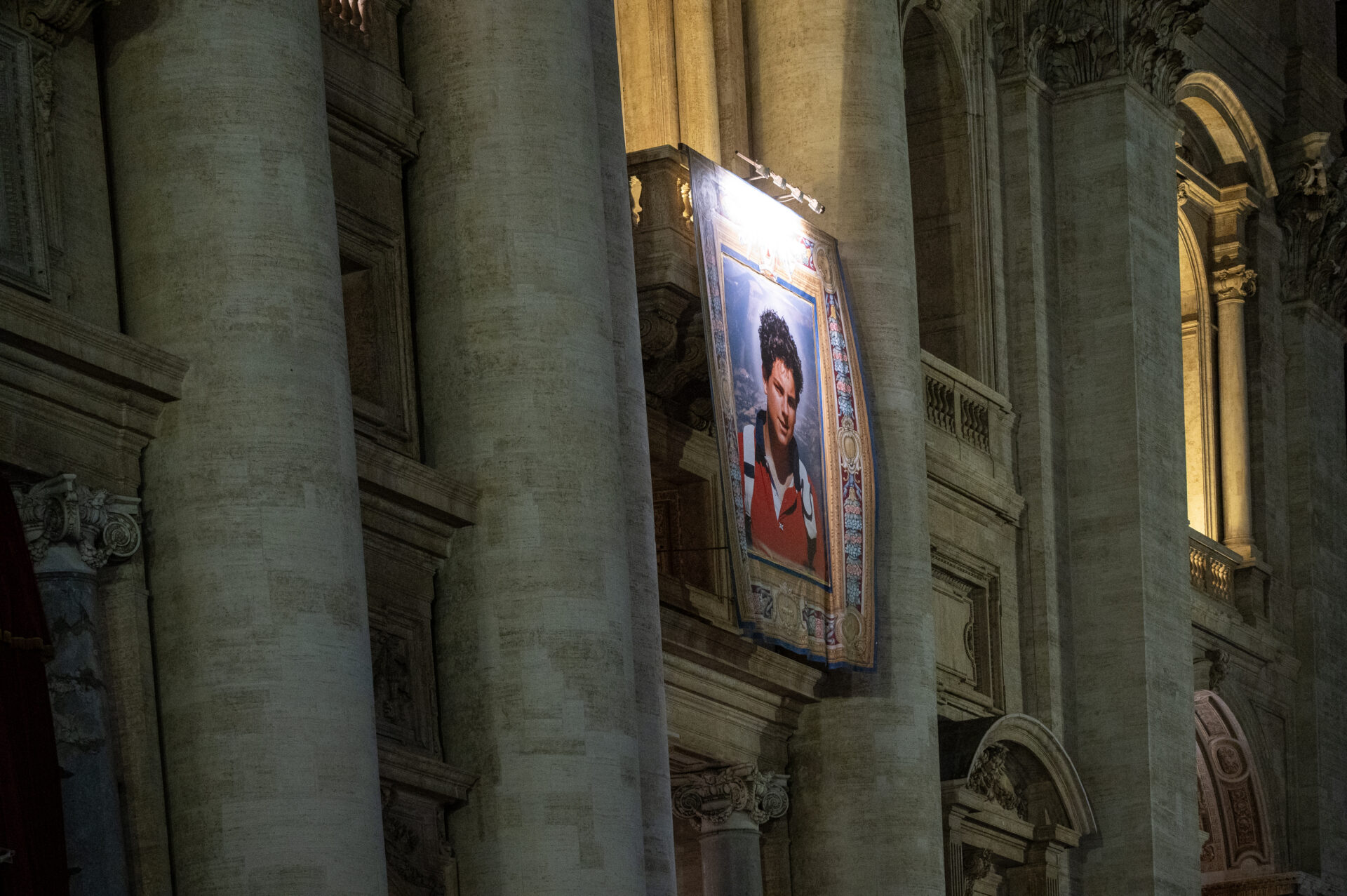
Last month, I took a couple of weeks for the first time in almost a decade to go on a pilgrimage. Last year, a friend of mine completed the 500-mile pilgrimage, the Camino de Santiago (“the Way of St. James”), which starts in the western part of France and ends near the west coast of northern Spain, something that has been on my bucket list for years. I decided that I would walk the first part of the Camino, with the intention of coming back to finish next year. The timing of my trip was providential; it just so happened to align perfectly with the canonizations of now St. Carlo Acutis and St. Pier Giorgio Frassati. It only made sense during this Year of Jubilee, which only happens every 25 years in the Catholic Church, to take advantage of the timing and start my pilgrimage in Rome by attending the canonizations.
As I walked, prayed, and reflected — both on the camino and in Rome — I was constantly struck by the history under my feet and modernity all around me. And in St. Peter’s Square, literally surrounded by the rich history of our 2,000-year old church, I witnessed the canonization of a saint who used the internet, with thousands of cell phones capturing the moment. I couldn’t help but notice the beauty of the timelessness of our faith being documented by modern technology.
In a similar way, the Camino has existed for centuries and has been walked by pilgrims who walked with the same intention I did: to seek God, self-discovery, and meaning along “the way.” As I hiked this ancient path through the French Pyrenees and into western Spain, I did so with modern tools.
When I arrived in Rome two days before the canonizations, my first stop was St. Peter’s Basilica so that I could enter through the Holy Doors and officially begin my pilgrimage. Inside, I noticed something that would probably be unexpected: QR codes and tap-to-give stations for votive candles.
St. Peter’s Basilica is often seen as our spiritual home in the Catholic Church, and the basilica isn’t hiding from technology. They were able to discretely but effectively place QR codes throughout the basilica to learn more about the basilica and to provide opportunities to give. And because they realize that a lot of pilgrims might not be traveling with cash or maybe some haven’t had the opportunity to exchange their currency, votive candles had tap-to-give options, which made it easy for pilgrims to light a candle and pray for their loved ones.
It struck me as a powerful symbol of how technology can enter sacred spaces in a positive way. Often, I hear parishioners and ministry leaders look at these basilicas, cathedrals and churches and say, “We need to build something this beautiful in our communities.” And yes, truth, beauty, and goodness do inspire, and we should invest in these things. However, in my experience, the same communities that invest millions in renovations and new sanctuaries often spend the bare minimum on digital infrastructure. As St. Peter’s Basilica shows us, the Church doesn’t need to choose between tradition and innovation. I would argue that we are called to embrace both.
From Rome, I continued my journey to France with the words of St. Pier Giorgio Frassatti’s words echoing in my head: “Verso ‘l alto, to the heights.” Even for a person who works in technology, technology became my surprising travel companion. I used several Camino apps that suggested routes, hostels, and restaurants for pilgrims, and I leaned on those pretty heavily.
But the tool I used most was also the most unexpected: ChatGPT. I would ask it to gather local recommendations for places to eat or stay (beyond what shows up on TripAdvisor or Yelp). Because I wanted a more authentic and native experience, it helped me discover local spots and hidden gems. Technology didn’t distract from my pilgrimage; it made it richer and more connected. Even something as modern as AI can serve a deeply human purpose when used thoughtfully.
Coming off of this pilgrimage, I felt affirmed in my belief that as a Church we don’t need to fear technology. We need to form it, shape it, and use it for good. That’s exactly what St. Carlo modeled, it’s what St. Peter’s Basilica is doing, it’s what Camino pilgrims will continue to do.
When I used tap to give at St. Peter’s Basilica or leveraged AI along the Camino, I wasn’t disconnected from the reality of what was going on around me. Instead, these tools allowed me to be more fully present to God and my neighbor along the way. Technology can never replace an encounter with God or the community, but it can facilitate and support one.
There can be a temptation in the Church to fear new technology, as if embracing technology means being an expert in order to engage with it; we simply need to be open. When it comes to living and serving with this openness, I often think of the words of St. John Paul II: “Do not be afraid.” We don’t have to fear what is new or even what we don’t fully understand yet.
At Pushpay, our goal is to help parishes use technology in ways that support mission and relationship. From AI-powered search tools that help staff better understand their communities, to digital giving that connects people to generosity in new ways, we’re helping Catholic parishes bring the “ever ancient, ever new” reality of our faith into daily life.
Technology is only a tool, yet when used well, it can deepen connection, inspire reflection, and even illuminate the path for someone else’s journey. My pilgrimage reminded me that our faith has always been about embracing our spiritual heritage, walking together, and being fully present to the moment one step at a time. And today, some of those steps might just be guided by the light of a phone screen.