RESOURCE
Church Tech Check

Creating a unified experience across a multisite church presents unique challenges for leaders, but with the right approach and the support of reliable multisite church software, those challenges become an opportunity to bring together multiple communities under a shared vision.
With the right tools and a thoughtful strategy, your church can deliver consistent experiences, strengthen its mission, and build lasting connections across every location. That process starts with a clear path forward.
A comprehensive vision and mission is the key to a unified multisite church. Creating and reinforcing a shared vision and mission is no small task, but with a thoughtful approach, it’s more than achievable.
The first step in this journey is to clearly articulate your church’s goals. This is the driving force behind your church’s existence. These goals must be clear, concise, and compelling. They should resonate deeply with your congregation and be a part of each campus pastor’s heartbeat—and let that drive the vision.
Now, a common thought is that each of your multiple campuses should have their own vision and mission, that each campus should essentially act as its own small church. But to create a healthy multisite ministry, it’s incredibly important that each campus pastor be willing to adopt and align your church’s overarching mission and vision.
Your vision should be crafted to your local church. Though you have many campuses, you are still serving a unique community, and everyone would benefit from you building a mission and vision statement that is specifically tailored to your circumstances. For example, a mission statement like, “It is our mission to glorify Jesus Christ through the fulfillment of the Great Commission,” is a fantastic goal for every church, but it’s not built specifically for you and your growing church.
Take the time to meet with your campus pastors and/or teaching pastors, and keep their perspectives in mind as you craft a vision and mission statement for your multisite church.
Once you’ve crafted this statement, it’s time to embed it into every facet of your church’s activities. From Sunday sermons to community outreach programs, from training church leaders to volunteer orientations, the vision and mission should inform the “why” behind all your activities and decisions.
Communication is a key element in developing your vision and mission. Regular meetings with leadership from all sites can ensure consistency in messaging and provide a forum for discussing any challenges or new ideas. Use multiple channels—newsletters, social media, church websites—to consistently communicate your vision and mission to the congregation.
Another powerful strategy is to celebrate stories of the vision and mission in action. Share testimonials from members who have been impacted by the church’s work. Highlighting real-life success stories can inspire your congregation and reinforce the importance of these guiding principles.
Developing a unified vision and mission is a continuous process—one that requires commitment, communication, and a lot of heart. But the rewards are immense. A church united under a common vision is a force for good, capable of bringing about meaningful change and spreading the impact of the Church in the local community.
Integrated digital platforms such as church apps and livestreaming services now play a pivotal role in unifying different church sites and delivering consistent worship experiences.
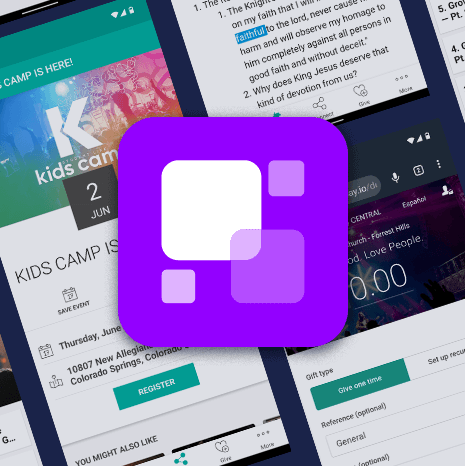
Church apps can almost be considered the central campus of your ministry. Your church app serves as a centralized hub for all your content and activities, including things like sermon recordings, event calendars, online giving, prayer requests, and small group communication.
Every member, no matter their location, can access the same information and opportunities for engagement.
The mobile extension of your ministry. Only Pushpay offers a leader-only app in multiple languages.
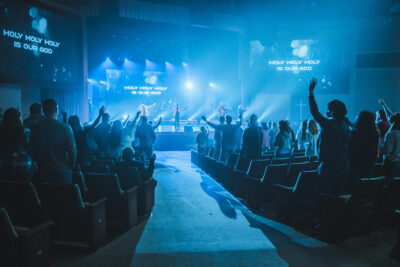
Livestreaming and video services, such as Resi’s Multisite Streaming Platform, also play a crucial role in connecting multisite churches. These technologies allow for real-time broadcasting of church services, which means that members at each multisite campus can participate in worship simultaneously.
In addition to live video services, content platforms can be used for sharing past sermons and educational resources. This allows members who missed a service or those who want to revisit a particular message to do so at their convenience.
By harnessing the power of digital platforms like church apps and livestreaming services, you can ensure consistent messaging, foster community engagement, and deliver seamless worship experiences across all your sites. These technologies not only help to overcome the challenges of a multisite model but also open up new possibilities for growth and outreach.
This is one of the most critical factors in creating a church experience that is consistent from one campus to the next. When operations run smoothly with a unified message, it not only enhances the worship experience for your congregation, but also strengthens your church’s brand and identity.
Standardization is a key step in creating operational consistency across your church campuses. This means developing systems and processes that can be followed at every site.
When elements like the order of service, style of music, and outreach programs are consistent, members experience a sense of unity, no matter which location they attend.
Creating a detailed operations manual is one of the most effective ways to support standardization. This document should outline expectations for staff and volunteers and include clear instructions for every part of church life.
A well-organized manual might include:
Standardization does not mean every site must be identical. Each location can still reflect its local culture and community needs. What matters is that your core vision, mission, values, and messaging stay consistent throughout your multisite church.
These necessary practices play a crucial role in maintaining operational consistency. By equipping your staff and volunteers with the necessary skills and knowledge, you empower them to uphold the standards and values of your church across all sites.
Annual or semi-annual training sessions should be held to keep your leadership network updated on the church’s operational procedures and to address any changes or new initiatives. These sessions can also serve as a platform for sharing best practices, addressing challenges, and building a sense of camaraderie among staff from different sites.
It takes a lot of work and dedication to ensure that your staff are all on the same page, but the payoff is well worth the effort. With consistent operations, you can provide a unified and enriching worship experience for your congregation, strengthen your church’s identity, and nurture a sense of belonging among members—no matter where they choose to worship.
Building a strong multisite church takes work, but the results are worth it. With a clear vision, consistent systems, and the right tools, you can create a connected experience across every campus.
Church management software like ChurchStaq can help streamline communication, organize operations, and keep your teams aligned, no matter where they’re located.
When your campuses share the same purpose and stay connected, your church is better equipped to grow, reach more people, and serve your communities well.
Comprehensive church software built to grow community, generosity, and engagement.