Reaching the Missing Generation: Why Parishes Must Embrace Technology

Technology can help Catholic parishes tackle declining attendance, boost giving, and re-engage Millennials and Gen Z in their faith.
Ryan Eads
Ryan Eads Updated August 15, 2025 · 6 min read

I recently had the privilege of representing Pushpay at the Diocesan Information Solutions Community (DISC) Conference in Nashville.  As a CISO, I spend most of my time on back-office activities so it is a special treat for me when I get to meet face-to-face with our customers, and members of the church community.  As a proud Catholic, I was particularly excited to be a part of this conference.  It certainly didn’t disappoint, and as with any good conference, left me with things to ponder long after the closing remarks.

Challenges Facing Catholic Parishes

Since this was a conference largely populated by Catholic technologists, I expected to hear enthusiastic stories about how technology was advancing the mission of the Church.  While there were certainly some of those, other themes were pervasive.  One of those was how hard it is for parishes to hit their giving targets.  Another was how attendance is dropping.  I also heard about the Diocesan dichotomy between metropolitan parishes that are more amenable to technology in the Church, and rural parishes that are loath to risk tipping the apple cart by altering the collection baskets and bulletins paradigm.  Many parishes depend upon volunteers and there is a palpable concern that adding complexity will chase them away.  This makes it very challenging for a Diocese or Archdiocese to either mandate or provide technology for all of their parishes.  At the same time, many parishes struggle to independently attain the funds to invest in technology.  Fixing the leaky roof will win 10/10 times versus introducing technology where there is no guarantee of parishioner adoption.
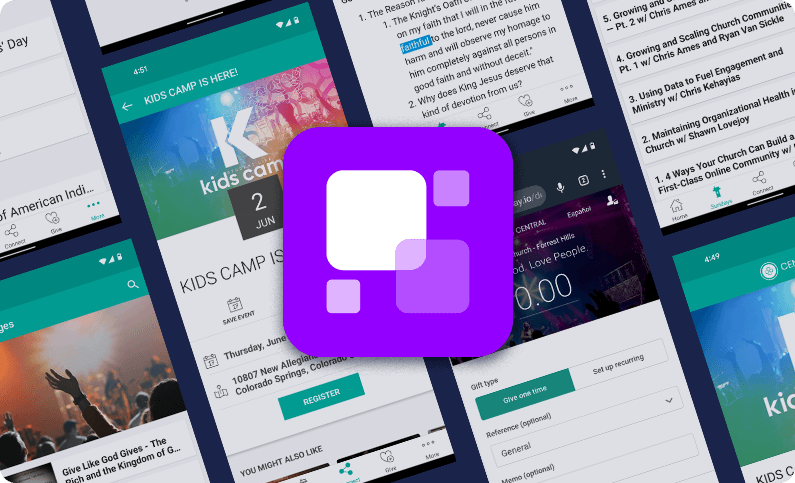

Tour our Parish Apps Product
Grow into the future with a mobile-first strategy.
TAKE A TOUR

Why Young Adults Are Missing from the Pews

During his conference presentation, my colleague, Anthony Welch, discussed Pew research that revealed if current trends continue, only 38% of Americans will identify as Christian by 2070.  Not Catholic, Christian.  Catholics will be a subset of that figure.

As the conference went on, I found myself trading my conference enthusiasm for frustration.  First and foremost, I was frustrated because the Gospel should be enough to sustain and grow the Church but it is not having that effect.  The data shows what anyone can see just looking around their congregation: the pews are generally bereft of young adults.

I do not believe that it is because these generations are cynical or faithless.  They are busy, to be sure, but no more than the generations that came before them.  The difference is that, starting with millennials, technology has been a core component of their life, from childhood to adulthood.  My kids are either young adults or will soon be.  They watch movies with their friends, who are in different places, over their phones.  They use myriad social media apps to stay connected with their friends and to make plans.  They use map applications to get everywhere, even the grocery store five minutes away.  They use Apple Pay wherever they can.  It is no wonder that they panic when there is no cell service or their low battery warning appears.  Their lives run through their phones because all of their peers’ lives run through their phones.

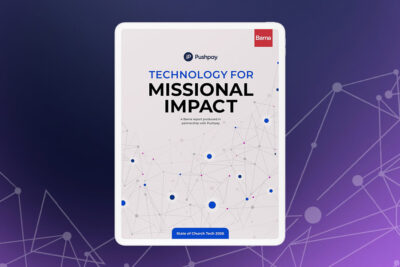
So where’s the disconnect? According to data from Pushpay’s 2025 State of Church Technology Report, Catholic Edition, Churches who acknowledge tech’s importance in achieving their mission are much more likely to attract Millennials and Gen Z into their parish. That said, while Catholic leaders match Protestant enthusiasm for tech, they’re 33% less likely to report increased engagement with Gen Z over the past year, and 69% less likely with Millennials. This dramatic shortfall can only be explained by the specific tech decisions parish leaders are making.

There is the heart of the challenge.  If the Church does not exist on their phone, it does not exist in their lives.  The baskets and bulletins paradigm breaks down for generations who do not carry cash or checkbooks and who get their information from apps, not paper.

Tour our Parish ChMS Product
The only cloud-based solution for parishes in English and Spanish.
TAKE A TOUR

Technology Is Not the Enemy—It’s the Missing Link

The DISC conference illustrated, in stark relief, the reason that I joined Pushpay.  Joining Pushpay appealed to me because I saw during the pandemic how powerful technology can be for engagement and the idea of marrying that with the mission of the Church resonated strongly with me.  My interactions at the conference and subsequent consideration illustrated how crucial technology – particularly mobile applications – are to the Church’s health.

Parishes do not have a donation problem.  They do not have an attendance problem.  They have a communication problem.  The Gospel is as compelling as ever.  It is just not reaching a broad swath of people.  To get younger attendees at Mass, parishes need to be a part of the app ecosystem on their phones.  For folks whose life passes through their phone, it is nothing less than essential. When the Church’s notifications are among those streaming across device screens, it becomes a part of the device owner’s life.

Investing in the People Not in the Pews (Yet)

I believe that Parishes need to change how they think about technology investment.  They are not targeting the people already in pews.  They are investing in the people who are missing from them.  Using technology to engage them where they are will draw younger parishioners back.  Providing them with a means of donating in a manner that is familiar will refill dwindling coffers.

That being said, one of the biggest challenges for parish leaders is also knowing the needs of their parishioners, and who to connect with. How can they identify the person praying for a breakthrough, the volunteer ready to lead, or the family considering leaving the church? Tools like Pushpay’s AI Search, which uses natural language query, is a great way for parish leaders to quickly identify and take action on those needs. At Pushpay, we’re continuing to innovate our solutions to enable you to connect and take action on the moments that matter most.

Ultimately, I find myself encouraged by the DISC conference.  Those who gathered at the conference certainly are experiencing similar headwinds, but were unified in their belief that not only is there a place for technology in the Church, its future depends upon it.

To learn more about emerging cultural and digital trends in the Catholic Church, check out insights from the Catholic edition of our 2025 State of Church Technology report.

Tour our Parish Giving Product
A comprehensive solution for secure, cheerful giving & donor development.
TAKE A TOUR
Ryan Eads
Ryan Eads Ryan Eads is the Chief Information Security Officer at Pushpay, bringing over 20 years of expertise in global security, risk, and compliance programs. He takes a people-first approach to building programs that align with business strategy and minimize complexity—both for the companies he works for, and their customers. As a proud Catholic, Ryan is passionate about connecting with church leaders and communities to ensure that technology remains both secure and mission-driven. View more posts from Ryan Eads
Featured Content
Take the next steps for your growing ministry.

Stop managing your people and start inspiring deeper forms of community.

Get Bi-Weekly Updates