Springs Church faced a common problem that many churches experience – disconnection from their congregation. They recognized that many people leave the Church because they don’t feel connected. So, they made a bold move to prioritize connection in their congregation.
Instead of preaching from the pulpit, they turned one of their typical Sunday morning services into a Connection Sunday. During those two services, church leaders helped their congregation connect with each other and the church by walking through all the features of their new custom church app.
Using technology to build real connection
From group sign-ups to sermon notes to giving options, Springs Church members discovered how their app could keep them connected to their community. The app also empowered members to volunteer and get involved in connection groups, making it easy for them to contribute to the church’s mission in a meaningful way.
By leveraging a custom church app, Springs Church has created a culture of connection and engagement that goes beyond Sunday services and is truly transforming the lives of its members. Ashley Moore, Springs Church’s Executive Administrative Assistant, shared, “The app has just become the way that everybody finds the information that they need in the church.”
Sustaining engagement beyond Sunday
Now, after Connection Sunday and the launch of their church app, Springs Church prioritizes community engagement by devoting time during each service for meaningful connection and ministry opportunities.
Karen Woodyard, Deacon Ministry Director, said, “There was a QR code up on the screen, and Pastor Michael said, ‘Okay, I want everybody to give to this orphanage in Haiti.’ Everybody lifts up their phone, takes a picture of the QR code, and within 10 seconds, donations just started piling in. The app made it so much easier.”
They’ve created a more connected community and increased engagement within their congregation. Karen said, “We’ve finally made it super easy to connect. For many people who get disgruntled with the Church, it’s usually because they didn’t feel connected. And I really feel that Pushpay gave us that edge to where people now can really feel connected because everything’s right there, right in front of them, with the church app.”
TOUR PUSHPAY’S CUSTOM CHURCH APP BUILDER
Where texting fits in your strategy
Email still does real work. Long announcements, event details, the photos and links you want people to see, all of that belongs in an inbox. The problem is timing. Plenty of it sits unopened until midweek, if it gets opened at all. A text gets read in minutes.
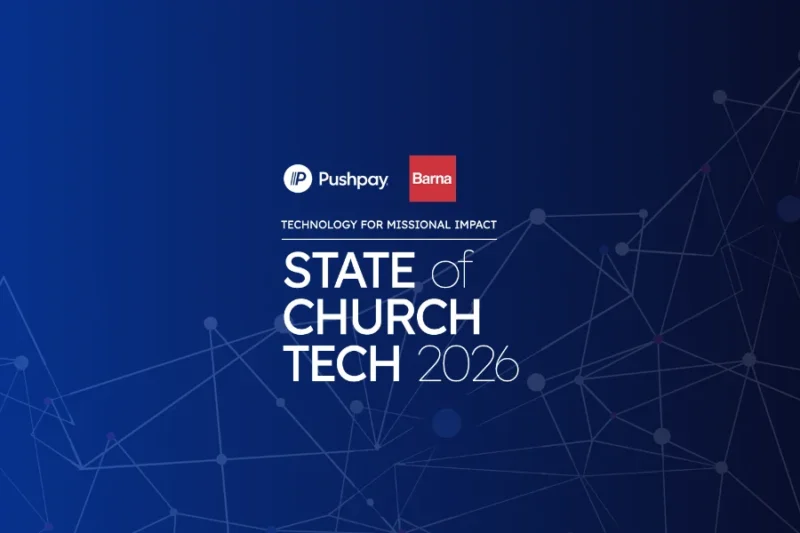
That gap is why texting has quietly become standard practice for churches. The 2026 State of Church Technology report from Barna and Pushpay found that most churches already use SMS to reach members or staff. So the question isn’t really whether to text your congregation. It’s whether you’re doing it on purpose or piecing it together.
Most churches are piecing it together. The youth pastor runs a group-text app on the side. Somebody set up a separate tool for snow-day alerts. And there’s usually one volunteer who still owns the phone tree nobody wrote down. None of it connects to your member list, so every group is a little out of date the moment someone joins or moves on.
When your texting runs inside the same platform that holds your people and your groups, you text the actual serving team, not a list somebody exported back in March. Pushpay’s church texting works that way, pulling from the same database as your giving and your groups.
What to send by text
Keep it short, useful, and rare enough that people still read it. Texting earns its keep on the messages that can’t wait: a service cancellation, a last-minute room change, a reminder the night before someone’s scheduled to serve. You can send to the whole congregation or a single ministry, and with no per-message fee, blasting a weather update wide costs you nothing.
The bigger win is the stuff you set up once and stop thinking about. Volunteer confirmations, event reminders, and alerts that fire when a form comes in all run on their own once they’re built. The person greeting at the 9:00 gets a text the night before without anyone on staff remembering to hit send.
Texting has a ceiling, though. It’s a terrible place for a newsletter, and the fastest way to lose a congregation’s permission is to text them too often or about things that could have waited for Sunday. Treat the channel like it’s expensive even though it isn’t, and people keep opening your messages. If you want the full version of doing this well, including opt-in setup, we wrote a complete guide to church text messaging.
Texts or app notifications?
Worth knowing the difference, because they aren’t the same tool. A text goes to the phone’s built-in messaging app. Nothing to install, which is why it reaches the member who never downloaded your church app, but you’re stuck with plain, short messages and almost no sense of what happened after you sent it. A rich push notification comes through your app, so it can carry an image, a link, a poll, or a survey, and it shows you what people actually opened and tapped.
So: texts for the can’t-miss alerts that should reach everyone. Push notifications when you want richer content and real engagement data. Most churches end up using both, for different jobs.
 Search
  1-844-PUSHPAY